Field report 02 · 12 min · The year · The calendar
The plucker's calendar: a year on a 1,400m estate.
A reading of the working year, week by week, on a Dimbula estate at fourteen hundred metres — two flushes, one dormant interval, and the long rhythm of the high country.

Hatton · February 2026
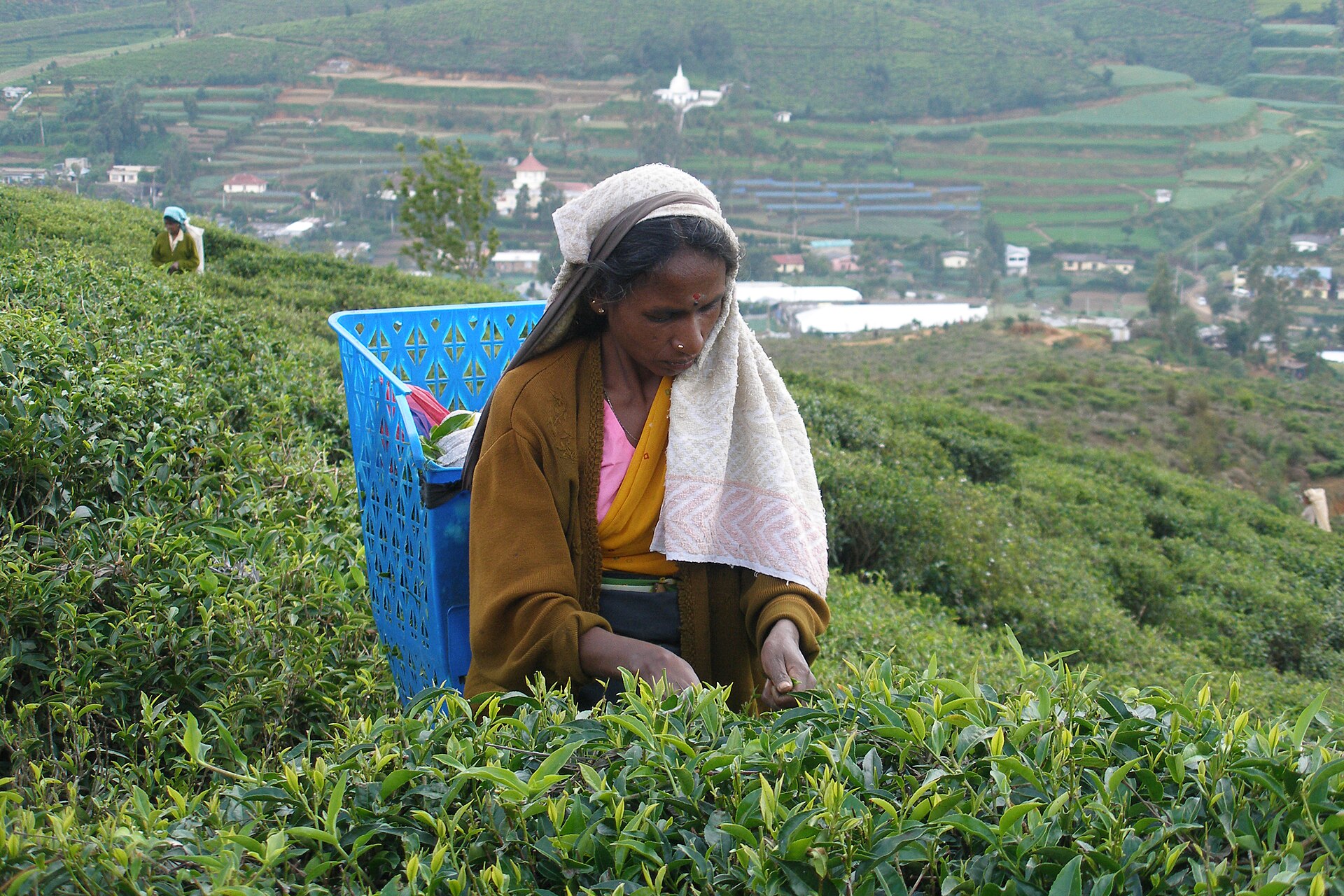
The tea bush is a perennial. Its leaves do not have a single harvest in the way that a cereal does; they are taken in repeated rounds across a year that the bush, on its own, would prefer to use for vegetative growth. The plucker's calendar is the calendar by which the bush is held to a working rhythm — the rhythm that produces leaf for the factory rather than wood for the bush itself. On a Dimbula estate at fourteen hundred metres, the calendar I am describing here is what that working rhythm actually looks like, week by week, across a representative year.
The estate
The estate I am taking as my example is in the Talawakelle valley, on the western slope, at elevations between thirteen hundred and fifteen hundred metres. It is a hundred and ninety hectares under tea — the average area for a Dimbula estate of the older planting — divided into eleven fields that the factory office numbers from one to eleven and that the workers know by their old names: Lower Bungalow, Middle Bungalow, Upper Bungalow, Long Field, Short Field, the Rocks, the Stream Field, the New Clearing, the Old Clearing, Sandhya's Field (named for a head kangani's daughter), and Hill End. The bushes are a mix of the old seedling tea planted between 1885 and 1910, and the newer TRI-2025 and TRI-3000 vegetatively propagated clones planted from the 1970s onwards. The seedling tea is, in many of the older fields, more than a century old.
January and February — the cold months
The year, for the planter, begins in the cold. January and February in the high Dimbula are the coldest months — overnight lows of seven or eight degrees, daytime highs of eighteen — and the bush grows slowly. The plucking rounds are spaced at fourteen or fifteen days; the pluckable area on the bush is small; the daily intake at the factory is one of the year's lowest. But the leaf that does come in, in those months, is the year's finest. The cold slows the bush enough that the leaf concentrates its aromatic compounds, and the resulting tea — the so-called western quality season — is the basis of the Dimbula's reputation in the London auction.
For the pluckers — almost all of them women, on the Dimbula estates, drawn from the Indian Tamil families that have been on the estate for generations — January and February are weeks of low piece-rate earnings and long cold mornings. The plucking begins at seven, when the dew is still on the leaf; the head kangani assigns each woman her row; the supervisors weigh the bags at eleven and again at three; the day ends at half past four, when the lorries take the leaf to the factory. The daily intake per woman is fifteen to eighteen kilograms — at the lower end of the year — and the piece-rate top-up beyond the base wage is small.
March and April — the south-west pre-monsoon
In March the weather changes. The first showers of the south-west pre-monsoon arrive, often in the late afternoon, and the bush, which has been waiting for the moisture, begins to grow. The plucking rounds shorten to ten or eleven days; the pluckable area on the bush expands; the daily intake at the factory rises rapidly. The leaf is still of good quality — the tea-maker is still happy with what he is producing — but the season is in transition. By the end of April the estate is in full flush, the pluckers are bringing in thirty to thirty-five kilograms a day, and the factory is running its first long shifts of the year.
May, June, July — the south-west monsoon
The south-west monsoon, on a western-slope Dimbula estate, is the season of high volume and low quality. The rains come in long afternoon sheets that wet the leaf and the picker; the bush grows fast, very fast, and the leaf that comes in is coarse and watery; the tea-maker, on a wet afternoon, will reject as much as a fifth of what the lorries bring in because the leaf has too high a moisture content for the withering troughs to manage. The quality season is over; the volume season has begun.
For the pluckers these are the weeks of the year's highest earnings. The daily intake reaches forty-five to fifty kilograms per woman on the best days; the piece-rate top-up is substantial; the working hours stretch until five in the evening because the lorries are running double trips. The work is harder — wet, cold, and long — but the pay is the year's best, and the household budgets of the estate lines are built around the May–July earnings.
August — the cross-over
August is the cross-over month. The south-west monsoon is in retreat; the bush is in its second sustained growth phase of the year; the leaf quality is recovering as the rains thin out. The plucking rounds are at their tightest — eight or nine days — and the daily intake at the factory is at its year's peak.
September and October — the eastern flush
The eastern flush, on a western-slope Dimbula estate, is a smaller affair than the western quality season but it is, in cup quality, the year's second-best. The weather is dry and cool — daytime highs of twenty-one or twenty-two, overnight lows of twelve to fourteen — and the bush, recovering from the monsoon, produces a leaf that has good aromatic concentration. The teas of September and October are sold, at the Colombo auction, as the eastern quality of the year.
For the pluckers, September and October are weeks of moderate earnings and pleasant working conditions. The days are dry; the rounds are at ten or eleven days; the daily intake is thirty to thirty-five kilograms.
November and December — the north-east monsoon and the dormant period
The north-east monsoon, on a western-slope estate, is the dormant season. The rains, when they come, are lighter; the temperatures drop; the bush slows its growth. The plucking rounds lengthen back to twelve or thirteen days; the daily intake at the factory falls; the year is winding down.
November is also the month of the annual estate inventory. The head kangani walks every field with the deputy superintendent; the bush counts are checked against the field maps; the previous year's pruning records are reconciled with the current bush state. Bushes that have died or are too damaged to recover are marked for the following year's replanting. The replanting itself, on a well-managed estate, runs at about one per cent of the area each year — a hundred-year replanting cycle that is, in practice, the timescale on which the estate is actually managed.
The pruning year
The pruning cycle is the slow, multi-year structure that overlays the plucking calendar. Each field is pruned, on a four- or five-year cycle, to keep the bush at the working height of the plucker's hand — approximately ninety centimetres for a standing plucker, slightly higher in the steeper fields. The pruning is done in the dormant months, in November or December, and the field is then taken out of plucking for sixteen to eighteen weeks while the bush regrows. The estate's eleven fields are pruned in rotation, so that two or three fields are out of the plucking schedule at any given time and the remaining fields carry the year's intake.
The plucking calendar, read against the pruning cycle, against the replanting cycle, against the seventy- or eighty-year working life of a single bush, is the calendar by which the country actually lives. Not the year, but the decade. Not the harvest, but the bush.
What the calendar tells you
Three things, in my reading.
First, the tea country is a country of two seasons of quality and one season of volume, with two cross-over months between them. The high price of a high-grown Ceylon tea is paid for the western quality of January to March and the eastern quality of September and October. The volume of the south-west monsoon pays the workers' wages but does not pay the estate's dividends.
Second, the calendar is determined by the geography. A western-slope estate has the calendar I have described above. An eastern-slope Uva estate has the same calendar inverted — the Uva quality season is in July and August, the volume season is in November and December. The same bush, the same elevation, on the opposite slope of the same mountain range, produces a different tea on a different calendar.
Third, the calendar is held together by the women who pluck the leaf. The estate's daily plucking record, kept in a hard-backed ledger in the head kangani's office, is the document by which the calendar is actually managed. I have read several years of one estate's ledgers, with permission, and the rhythm of the country is in those pages more clearly than in any agronomic report.
Researched from the field ledgers of three Dimbula estates (1992–2024), the Tea Research Institute's annual Climate & Yield Report (2018–2024), and field visits between January 2025 and February 2026. Names of individual workers and estates have been withheld at the request of the management.